200 People Chose Technical Storytelling. Here's Why
Sep 29, 2026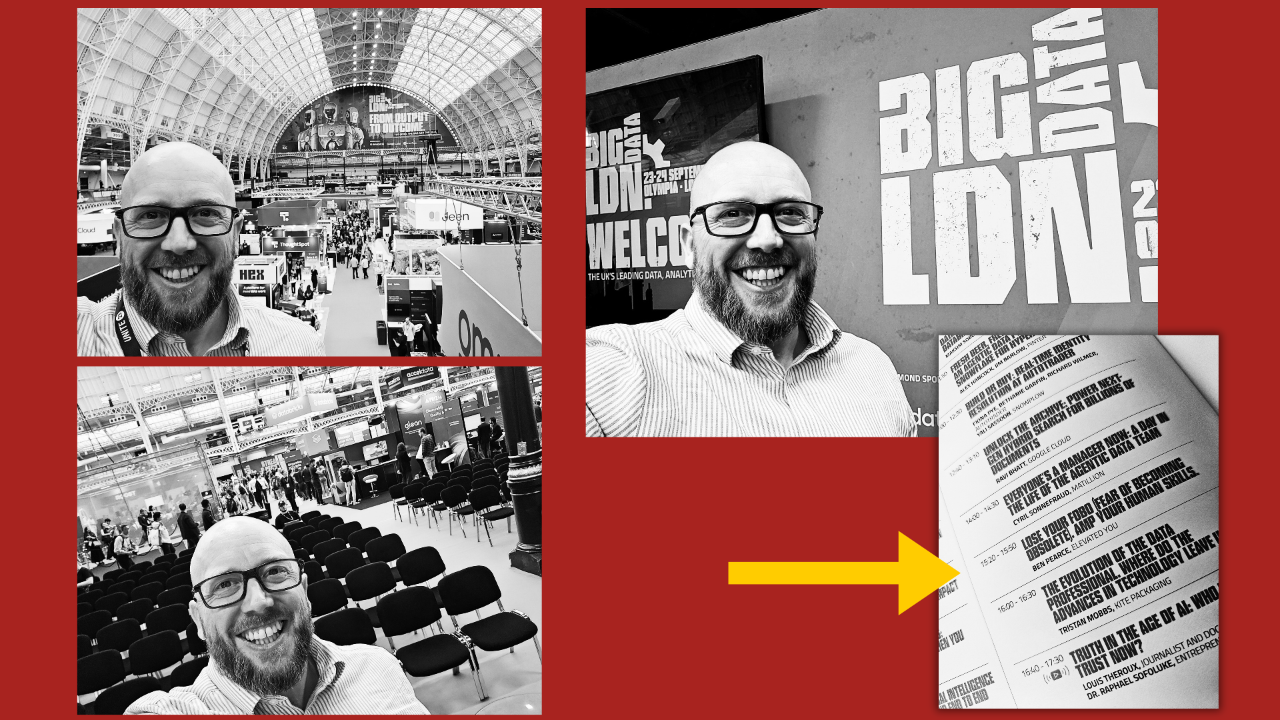
Standing room only. Nice!
That's what I walked into at Big Data LDN last week. Over 200 people crammed in, with more standing at the back and down the sides. At a data conference. To hear a talk about human skills.
That tells you something about where the tech world is right now.
Why Human Skills Matter More Than Ever
AI is taking on more and more of the technical heavy lifting. It writes the code, builds the query, drafts the architecture doc and summarizes the meeting. That's brilliant. But it changes what makes you valuable.
When everyone has access to the same technical horsepower, the difference between you and the next person isn't what you know. It's how well you influence, explain, listen and connect. Those are the skills AI can't do for you.
And the room at Big Data LDN wanted to hear more about it.
I Let The Audience Choose
For this talk I did something different. I ran it as a "choose your own adventure."
I gave the audience four options and let them vote for what I'd speak about:
- Giving Feedback
- Active Listening
- Planning A Presentation
- Storytelling
Side note: if you're presenting to a mixed audience and you're not sure what they care about, try this. It's a great way to be instantly relevant and it gets people engaged from the first minute, because they've already made a choice.
The result wasn't close. Storytelling won by a landslide, with roughly 80% of the room voting for it.
The Bit I Found Really Interesting
Here's what struck me. If I'd put the same option on the screen as "Creating An Emotional Connection," I don't think anyone would have voted for it.
It sounds fluffy. It sounds like something from a wellness retreat, not a data conference.
But that's exactly what storytelling is. It's the tool you use to create an emotional connection with the people you're talking to.
Technical people instinctively rely on the rational argument. Facts, data, logic. And you absolutely need that. A good argument is essential. But on its own it's not enough.
People make decisions, remember messages and get behind ideas when you engage them both rationally and emotionally. The logic earns their trust. The emotion makes them care and helps them remember. (I dig into the science behind this in Facts Don't Win Arguments. This Does.)
Stories give you both.
6 Tips For Telling A Good Story
Here's what I shared with the room.
- Choose a relevant story. It can't just be a good story. It needs to connect to the point you're making. It could be something that happened to you, your company or the wider industry.
- Keep it short. One to two minutes, max. That's around 150 to 300 words. You're not writing a novel. You're adding a spark to your message.
- Make it interesting. A story about what you had for breakfast won't land. A story about the outage that took down a customer's payment system at 2am on Black Friday will.
- Make it about people. The tech is never the hero. Put a person at the center of the story, make them relatable and show the impact on them.
- Give it a structure. Keep it simple: Setup, Action, Resolution. Set the scene, tell people what happened, then show how it was resolved.
- Stretch the emotion. If it was bad, make it terrible. If it was good, make it amazing. Use a bit of artistic license to amplify the feeling. Flat stories get flat reactions.
Build Your Story Bank
The biggest objection I hear is "I don't have any good stories."
You do. You just haven't gone looking for them.
So here's the exercise I set the room, and I'd love you to try it:
- Grab a notepad and write a list of the disasters you've encountered in your career. The failed migrations. The demo that crashed. The project that went sideways. The time you misread a stakeholder completely.
- Now write a list of your triumphs. The deal you helped win. The fix that saved the weekend. The moment a customer finally "got it."
- Pick three or four and build them out into short anecdotes using Setup, Action, Resolution.
Now you've got a story bank. A set of anecdotes ready to use whenever you need them.
Use Them To Bring Your Rational Topics To Life
Here's the key. Your stories aren't a replacement for your technical content. They're how you get people to care about it.
Explaining why data governance matters? Tell the story of the team that lost a week chasing a number nobody could trust.
Making the case for a new architecture? Tell the story of the outage that happened because the old one couldn't cope.
The rational argument gives them the reasons. The story makes them feel it. Together, that's technical storytelling, and it's how you get people to listen, remember and act.
Your Next Step
This week, write your list of disasters and triumphs. Pick one and turn it into a two-minute story. Then find a meeting where you can use it.
If you want to go deeper and build these skills properly, check out the Technical Storytelling Professional Program.
And a huge thank you to everyone who squeezed into that theatre at Big Data LDN. You made it a brilliant session.
Ben